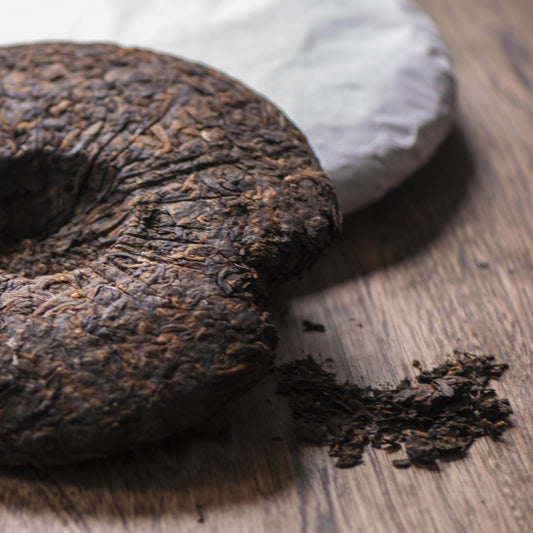
Pu-erh Tea
Pu'er is a fermented tea, but rather than a fast wet ferment - like a kombucha - pu'er tea undergoes a long, slow microbial fermentation process of dried and oxidised whole leaf tea.
In China, pu'er tea is sometimes described as dark or black tea. It is distinct from what is known as black tea in the West - which is known in China as red tea. It is also spelled many different ways from puer to puerh or even pu-erh tea, with many dashes and hyphens in between (pu-er, Pu'erh). Read more...
Shop 3 Rare Tea Co Pu-erh Tea Products
-
Malawi Leafy Pu'er
12 reviewsRegular price $23.00Regular price$0.00 $0.38 per cupSale price $23.00 -
Sold outChinese Pu'er
3 reviewsRegular price $12.00Regular price$0.00 $0.40 per cup$0.00Sale price $12.00Sold out -
Chinese Bingcha
1 reviewRegular price $188.00Regular price$0.00 $0.35 per cupSale price $188.00
The origin of Chinese pu'er tea is in Yunnan, South West China, where it is still crafted today through a complex process of slow fermenation. The tea leaves of the Camellia sinensis plant are sometimes made into bing cha - tea-cakes, or bricks, and wrapped only in paper to continue to age. Pu'er is also sold as loose leaf tea - for many in Yunnan - this is considered the best. Puβer cakes and bricks were developed and used to help compact the tea for easier transport and storage, not for flavour. The fact that small strips of paper can be pressed into the cake, making it easier to verify age statements, has contributed to their popularity, especially among auction houses and traders.
At Rare Tea we buy pu'er direct from farmers in Yunnan for the best flavour we can find rather than the value to traders, so we prefer loose leaf.
Chinese pu'er originates in Yunnan in South West China, where it is still crafted today. The tea leaves are mostly made into bingcha - cakes, or bricks, and wrapped only in paper to continue to age. It is also for sale as loose leaf tea. The art has been adopted by others beyond China and we are extremely proud to supply some of theΒ rarest fermented tea in the world, from Malawi.
An earthy, silky and deliciously umami infusion, pu'er is often drunk alongside food, especially in Hong Kong, but is increasingly popular in the UK and USA. Pu'er tea is considered good for digestion, helping the body break down fats. Some research suggests that the caffeine in pu'er is responsible for this. With earthy, deep, rich and complex flavours, pu'er pairs well with rich, savoury dishes and the flavour develops with many infusions.
Why choose Rare Tea Company pu'er?
Pu'er tea is a wonderful style of tea to choose if you enjoy more savoury, earthy and umami and dark loose leaf teas. It is also a category of tea with a rich history. Pu'er, like all fermented foods, was developed as a means of preservation. It was devised as a good way of preserving camellia sinensis leaf for transportation and storage. The tea improves with the ageing process, unlike other styles of tea that deteriorate through oxidation over time.
We have been visiting Yunnan and buying puβer for over 20 years. And we love it. This is not just a business for us, but a deep love.
Types of pu'er tea.
Though spelled in different ways, these terms all describe the same type of tea in that it is always fermented. The leaf is left to age for many months or years - growing in complexity the older it becomes. The ageing process of pu'er means it becomes smoother and more mellow with less astringency (or bitterness). Bingcha has even been traded as a currency (with prices in the thousands of pounds) as their rarity and historical weight increase.
There are two main types - ripe (shΓ³u) pu'er has first been "wet-piled", where it undergoes an initial wet fermentation for around 45 days to begin the fermentation process. This allows the tea to reach the smoothness and delicacy of a much older raw pu'er much faster. It is also much more affordable.
Raw (shΔng) pu'er is made from dry leaf left to slowly ferment just from the moisture in the air, without this wet fermentation, requiring decades to reach maturity.
Pu'er vs. black tea.
Pu'er has many characteristics that set it apart from other teas. While closer to black tea than green tea or white tea, pu'er belongs in its own category, having been processed completely differently to black teas. The slow fermentation of the oxidised tea leaves imparts a less astringent flavour profile to pu'er that is found in black teas (it has lower tannins than even the best loose leaf black teas). It is also much more earthy; reminiscent of a walk through an autumn forest in the rain.
A pot of pu'er tea has a wonderful savoury note and plenty of umami and woody sweetness, making it a wonderful option to pair with a combination of foods - both sweet and savoury.
What does it taste like?
Pu'er tea is obsessed over by many tea lovers, offering a unique and complex tasting experience that evolves with every sip. This aged tea is often compared to fine wine, boasting a rich tapestry of flavours and aromas that captivate the senses. To others, the earthy notes are too prevalent.
When brewed, pu'er tea reveals a deep, earthy aroma reminiscent of a forest floor after rain. As you continue tasting, you'll notice layers of fragrant flavour unfolding, from the subtle sweetness of honey and caramel to intriguing notes of mushroom and cedar. The flavour profile of pu'er tea is further enhanced by tropical fruity undertones.